Skip to content
What Are the Recommended Netball Court Lighting Standards?
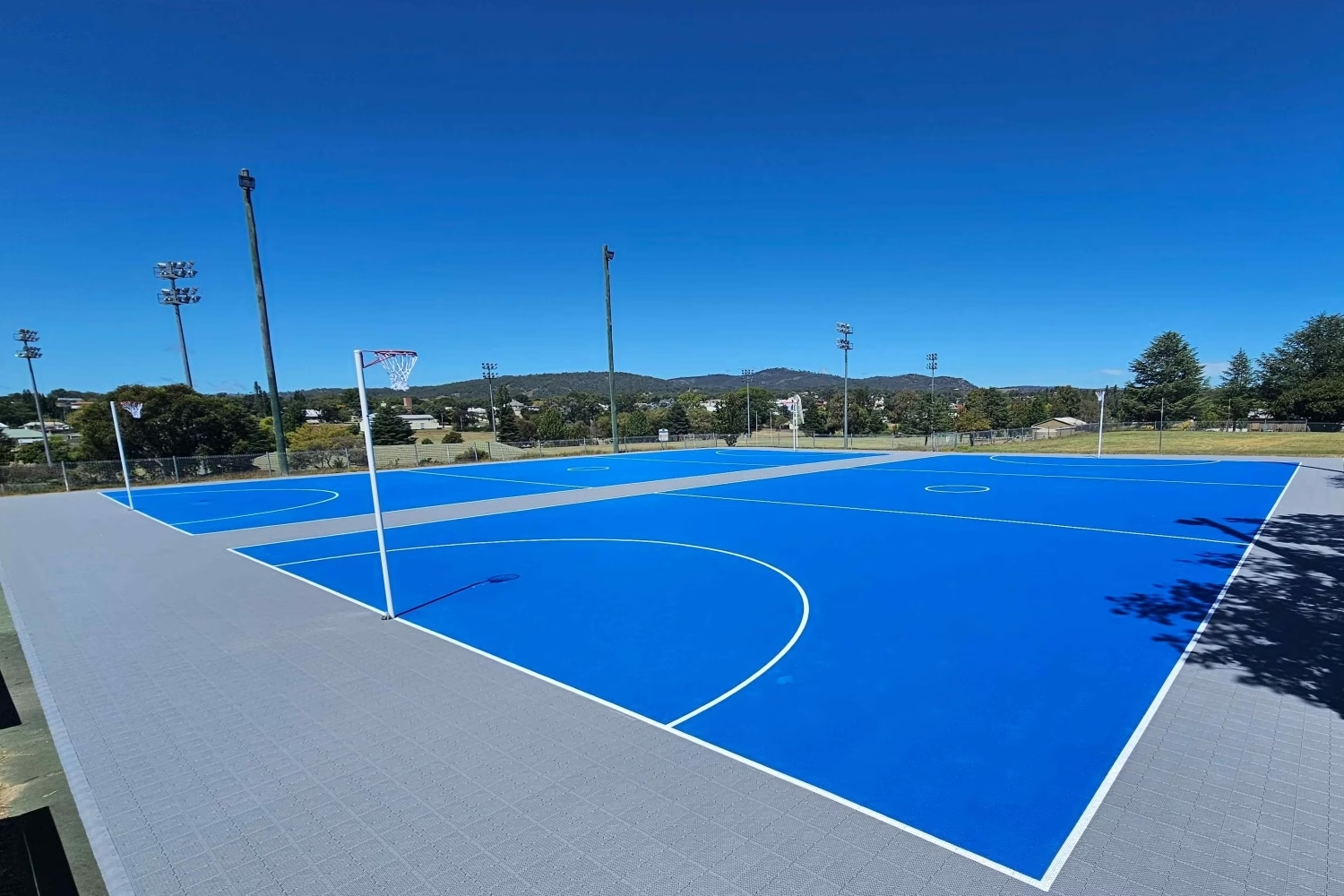
Poor netball court lighting can create safety risks, uneven visibility, and non-compliance with sports regulations. Many facility owners struggle to determine the correct lux levels, pole heights, and fixture specifications.
Most netball court lighting standards recommend 100–200 lux for training, 200–300 lux for club competition, and 500+ lux for national-level matches. Proper uniformity, glare control, and pole height selection are equally important for achieving safe and professional playing conditions.
Understanding these requirements helps sports clubs, schools, contractors, and facility managers select the right lighting system while reducing operating costs and future maintenance.
Which Netball Court Lighting Standards Apply in Different Countries?
Many buyers assume that lighting standards are the same worldwide. In reality, requirements vary by country and competition level.
Australia, New Zealand, the United Kingdom, Europe, and the United States all have sports lighting standards that define recommended lux levels, uniformity requirements, glare limits, and environmental controls for outdoor netball courts.
International Netball Lighting Standards Comparison
| Country | Standard | Training | Competition | Professional |
|---|---|---|---|---|
| Australia | AS 2560.2.1 | 100 Lux | 200 Lux | 500+ Lux |
| New Zealand | NZ Sports Lighting Guide | 100 Lux | 200 Lux | 500+ Lux |
| United Kingdom | BS EN 12193 | 200 Lux | 300 Lux | 500 Lux |
| Europe | EN 12193 | 200 Lux | 300 Lux | 500 Lux |
| United States | IES Sports Lighting RP-6 | 200 Lux | 300 Lux | 500 Lux |
Why Australia Is Often Used as the Benchmark
Australia has one of the largest netball communities in the world. Many international projects reference Australian standards because they provide detailed guidance specifically for netball facilities.
Australian standards focus on:
- Player safety
- Visual performance
- Uniform lighting distribution
- Community impact
- Light spill control
These standards are commonly adopted by:
- Schools
- Municipal sports facilities
- Community clubs
- Professional sports venues
What Buyers Should Focus On
The exact standard is important, but buyers should also evaluate:
- Average lux level
- Minimum uniformity ratio
- Pole placement
- Glare control
- Light spill restrictions
Meeting the lux requirement alone does not guarantee good lighting performance.
My Experience
In my experience, many overseas projects use Australian sports lighting recommendations as a starting point, even when local regulations differ. The reason is simple. Australian netball standards are practical and widely respected across the industry.
What Lux Level Is Required for Different Levels of Netball Competition?
Many facilities either under-light or over-light their courts. Both situations create unnecessary problems.
The ideal netball court lighting lux level depends on the level of play. Recreational courts generally require 100–200 lux, while national-level competitions typically require at least 500 lux.
Recommended Netball Court Lux Levels
| Level of Play | Recommended Lux |
|---|---|
| Recreational Training | 100–200 Lux |
| School Competition | 200 Lux |
| Club Competition | 200–300 Lux |
| Regional Competition | 300–500 Lux |
| National Competition | 500+ Lux |
| TV Broadcast Events | 750–1000+ Lux |
Why Lux Matters
Lux directly affects:
- Ball visibility
- Player reaction time
- Referee performance
- Spectator experience
- Video recording quality
Higher lux levels improve visibility, but they also increase installation and operating costs.
Finding the Right Balance
The goal is not to achieve the highest lux level.
The goal is to achieve:
- Adequate visibility
- Good uniformity
- Acceptable operating costs
- Long-term reliability
For many community facilities, 200–300 lux provides excellent value.
Cost Impact of Higher Lux Levels
| Target Lux | Relative Investment |
|---|---|
| 100 Lux | Low |
| 200 Lux | Medium |
| 300 Lux | Medium-High |
| 500 Lux | High |
| 1000 Lux | Very High |
As lux levels increase, projects typically require:
- More fixtures
- Higher wattage
- Larger poles
- Increased electrical capacity
My Experience
I often see clubs request 500 lux because it sounds professional. However, if the facility is mainly used for training and local competitions, a 200–300 lux design often delivers a much better return on investment.
How Does Lighting Uniformity Affect Netball Court Performance?
Many buyers focus on brightness and overlook uniformity. Poor uniformity can create dark spots even when average lux levels appear acceptable.
Lighting uniformity measures how evenly light is distributed across the court. Good uniformity improves player safety, visibility, and overall game quality.
Recommended Uniformity Ratios
| Uniformity Ratio | Performance Level |
|---|---|
| 0.4 | Poor |
| 0.5 | Acceptable |
| 0.6 | Good |
| 0.7+ | Competition Grade |
Why Uniformity Matters
Poor uniformity causes:
- Visual discomfort
- Shadowed areas
- Reduced ball tracking
- Increased injury risk
Good uniformity provides:
- Consistent playing conditions
- Better athlete performance
- Improved officiating
- Greater user satisfaction
Factors Affecting Uniformity
Several design elements influence lighting uniformity:
- Pole height
- Pole position
- Beam angle
- Fixture output
- Optical design
Simply adding more fixtures does not always improve uniformity.
Light Loss Factor Considerations
Professional lighting calculations should include a maintenance factor or light loss factor.
This accounts for:
- Dirt accumulation
- Lens degradation
- Environmental conditions
- Fixture aging
Without this adjustment, a new installation may fail to meet lighting requirements after several years.
My Experience
When reviewing failed sports lighting projects, poor uniformity is often a bigger problem than insufficient brightness. Players notice uneven lighting immediately.
What Pole Height Is Recommended for Netball Court Lighting?
Pole height has a major impact on lighting quality. Incorrect mounting heights can create glare and uneven illumination.
Most netball courts achieve optimal performance with lighting poles between 10 and 15 meters high. Higher poles generally improve uniformity and reduce shadows.
Recommended Pole Heights
| Pole Height | Typical Application |
|---|---|
| 8m | Recreational Courts |
| 10m | Community Courts |
| 12m | Club Competition |
| 15m | Professional Facilities |
Benefits of Higher Poles
Higher mounting positions help:
- Improve uniformity
- Reduce glare
- Increase fixture coverage
- Minimize dark areas
Side-Mounted vs Corner-Mounted Layouts
Side-Mounted Layout
Benefits:
- Better light distribution
- Lower glare
- Easier aiming
Corner-Mounted Layout
Benefits:
- Fewer poles
- Useful for multi-court facilities
Challenges:
- More complex design
- Potential shadow areas
Pole Placement and Installation Costs
Pole placement affects:
- Foundation costs
- Cable routing
- Maintenance access
- Wind load requirements
A professional lighting design should optimize both performance and installation cost.
My Experience
Many projects try to save money by reducing pole height. In most cases, this requires additional fixtures and often results in poorer lighting performance.
LED vs Metal Halide: Which Is Better for Netball Court Lighting?
Many older netball facilities still use metal halide floodlights. However, most new projects now choose LED technology.
LED netball court floodlights offer lower energy consumption, better light control, longer lifespan, and lower maintenance costs compared to traditional metal halide systems.
Performance Comparison
| Feature | LED Floodlights | Metal Halide |
|---|---|---|
| Energy Efficiency | Excellent | Moderate |
| Startup Time | Instant | 10–15 Minutes |
| Restrike Time | Instant | Delayed |
| Maintenance | Low | High |
| Lifespan | 50,000+ Hours | 10,000–15,000 Hours |
| Glare Control | Excellent | Limited |
| Light Spill Control | Excellent | Limited |
Energy Savings
LED systems can reduce energy consumption by up to 50% compared to legacy metal halide installations.
This results in:
- Lower utility bills
- Reduced carbon emissions
- Faster project payback
Maintenance Advantages
LED fixtures typically require:
- Fewer lamp replacements
- Less labor
- Reduced equipment rental costs
This is especially valuable for high mounting installations.
My Experience
Most sports facility upgrades today focus on energy savings and maintenance reduction. LED lighting delivers both benefits immediately after installation.
How Many LED Floodlights Are Needed for a Netball Court?
Many buyers ask for fixture quantities before completing a lighting design.
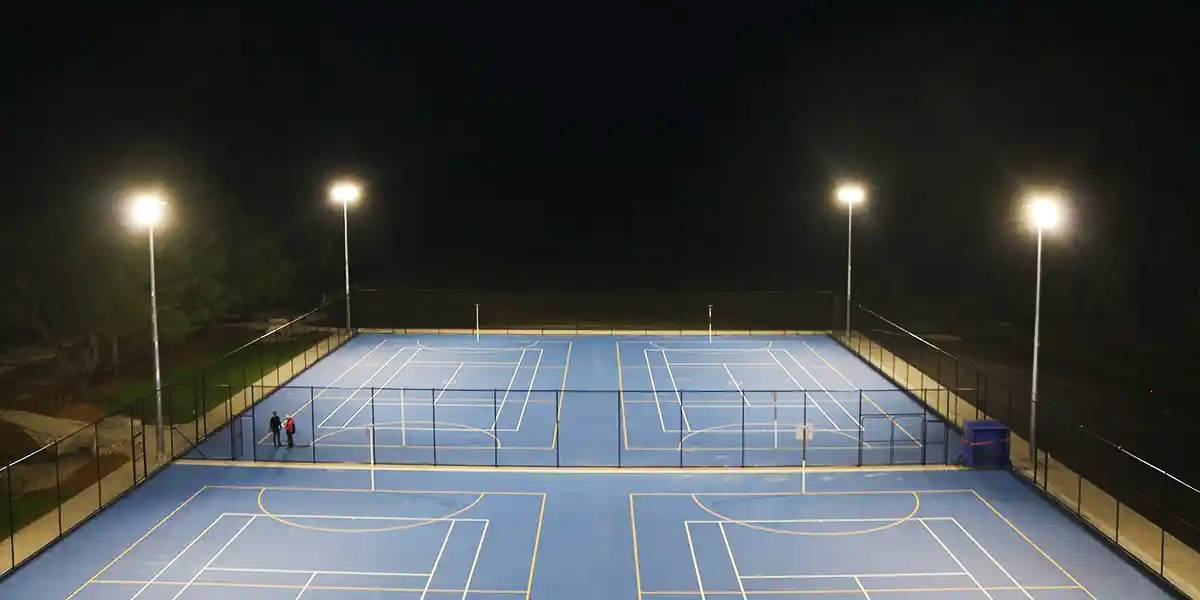
A standard netball court typically requires between 4 and 16 LED floodlights depending on the target lux level, pole height, beam angle, and fixture output.
Typical Fixture Quantities
| Target Lux | Typical LED Floodlights |
|---|---|
| 100 Lux | 4–6 Fixtures |
| 200 Lux | 6–8 Fixtures |
| 300 Lux | 8–12 Fixtures |
| 500 Lux | 12–16 Fixtures |
Factors Affecting Fixture Quantity
The final design depends on:
- Court dimensions
- Pole height
- Fixture wattage
- Beam angle
- Uniformity target
- Local regulations
Example Single Court Design
| Parameter | Value |
|---|---|
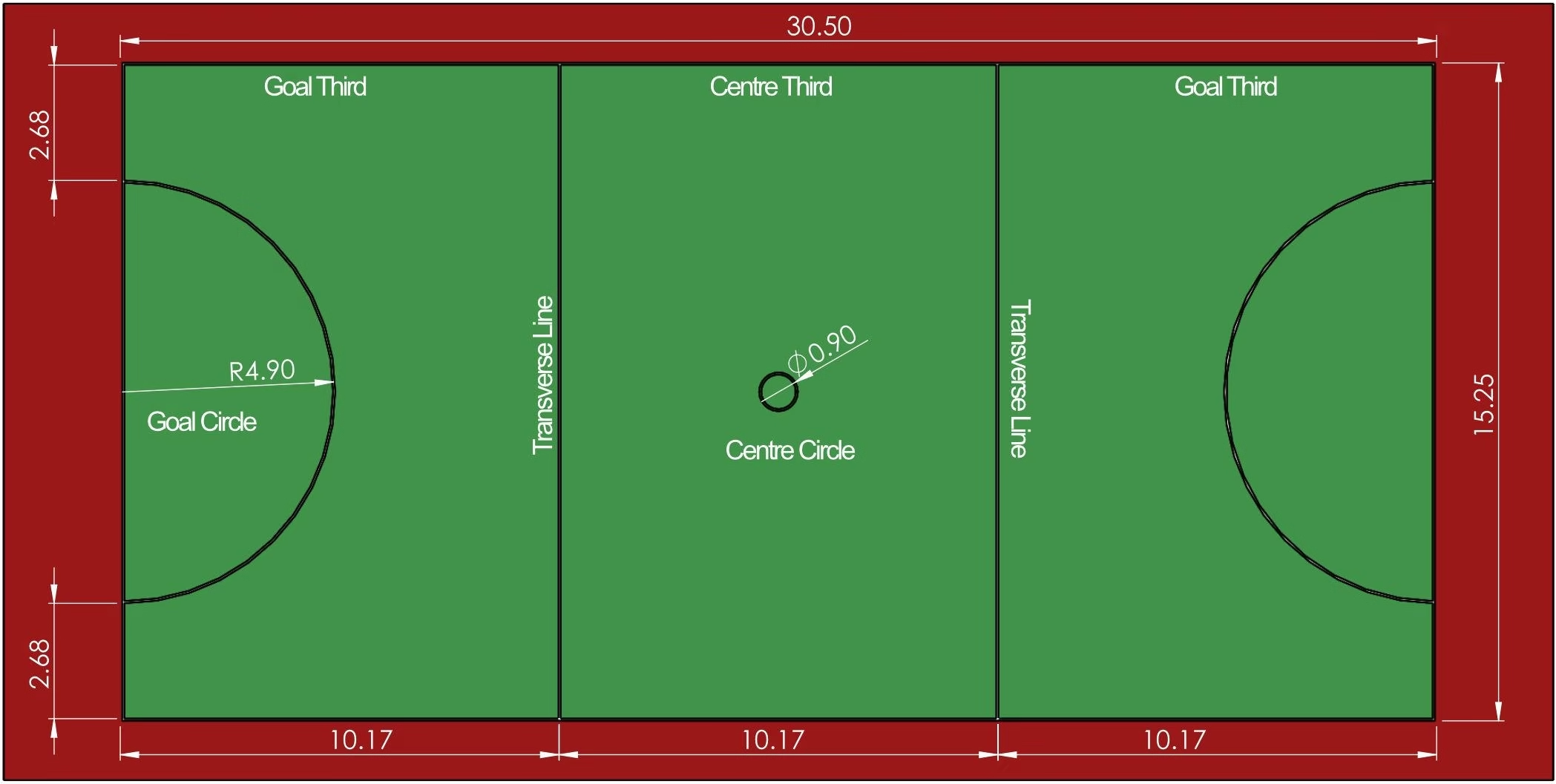
| Court Size | 30.5m × 15.25m |
| Pole Height | 12m |
| Fixture Power | 600W LED |
| Quantity | 8 |
| Average Lux | 250 Lux |
Example Multi-Court Design
| Parameter | Value |
|---|---|
| Number of Courts | 4 |
| Pole Height | 15m |
| Fixture Power | 800W LED |
| Quantity | 32 |
| Average Lux | 300 Lux |
My Experience
The biggest mistake buyers make is selecting fixtures based only on wattage. Proper sports lighting design depends far more on optics and layout than raw power.
Frequently Asked Questions About Netball Court Lighting
What is the minimum lux level for a netball court?
Most recreational courts require at least 100 lux. Competition courts typically require 200 lux or more.
What pole height is best for netball lighting?
Most projects achieve the best results with pole heights between 10m and 15m.
Can LED floodlights replace metal halide fixtures?
Yes. LED floodlights provide better efficiency, lower maintenance costs, and superior light control.
How can light spill be reduced?
Using precision optics, proper aiming angles, and professional lighting calculations helps minimize light spill.
Why is uniformity important?
Uniform lighting improves visibility, reduces shadows, and enhances player safety across the entire court.
Conclusion
Proper netball court lighting requires more than achieving a target lux level. Buyers should evaluate lighting standards, uniformity, pole height, glare control, and fixture quality together. A professionally designed LED netball court lighting system delivers better visibility, lower operating costs, reduced maintenance, and long-term value for sports facilities.