Skip to content
What Is the Optimal Pickleball Court Lighting Setup for Safe and Competitive Play?
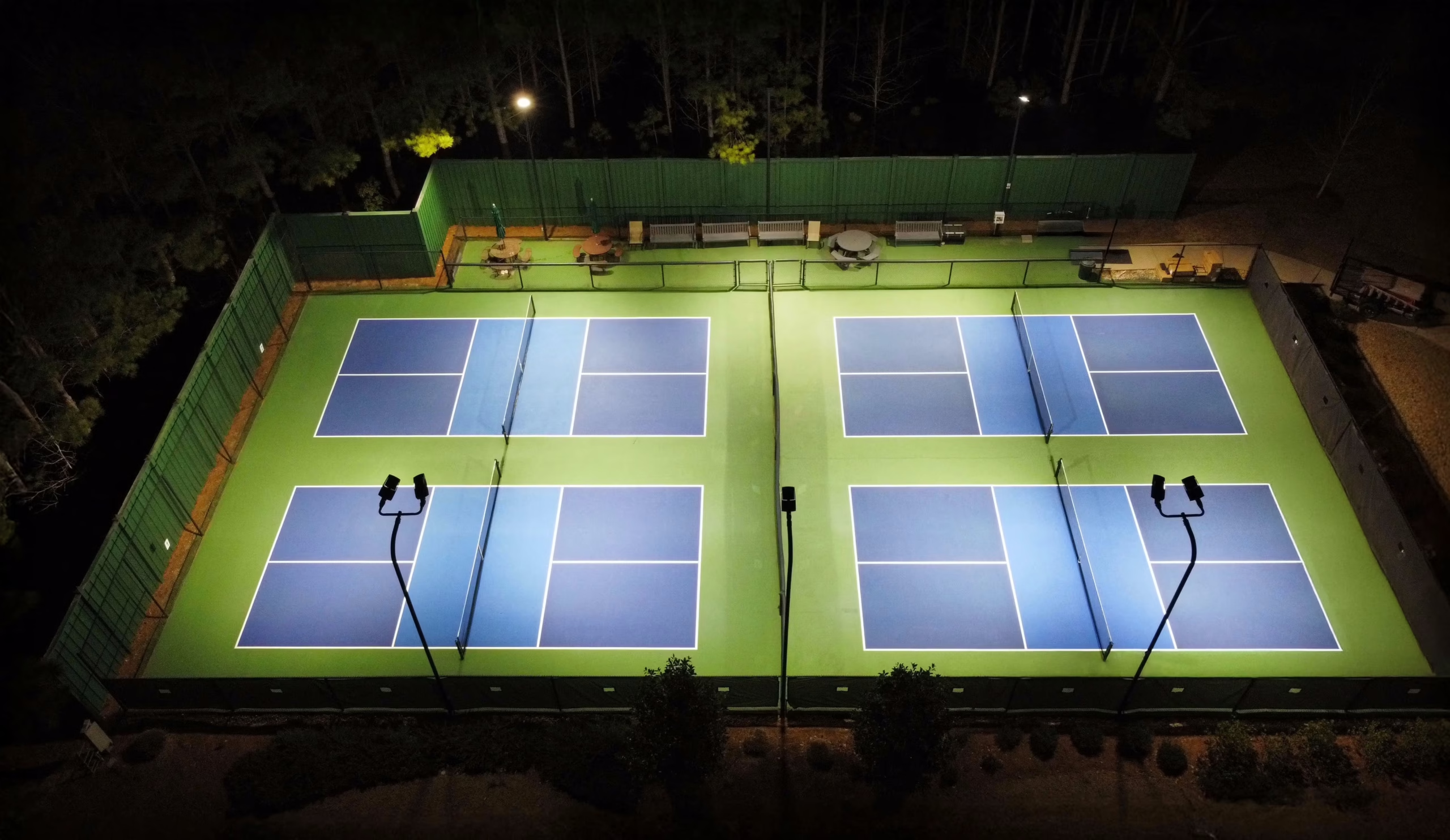
Poor lighting can make it difficult to track the ball, especially during high lobs and fast rallies. Glare, shadows, and uneven light distribution can also affect player comfort and safety.
The optimal pickleball court lighting setup combines appropriate illuminance levels, suitable mounting heights, effective fixture placement, and good lighting uniformity. Most recreational courts are designed for 300–500 lux, while club and competition courts typically target 500–750 lux.
Choosing the right lighting is not only about brightness. Fixture optics, pole placement, mounting height, and lighting design all influence the final result.
Why Is Proper Pickleball Court Lighting Important?
Poor lighting affects both player experience and court operations.
A well-designed pickleball lighting system improves ball visibility, reduces glare, enhances safety, and allows courts to operate effectively after dark.
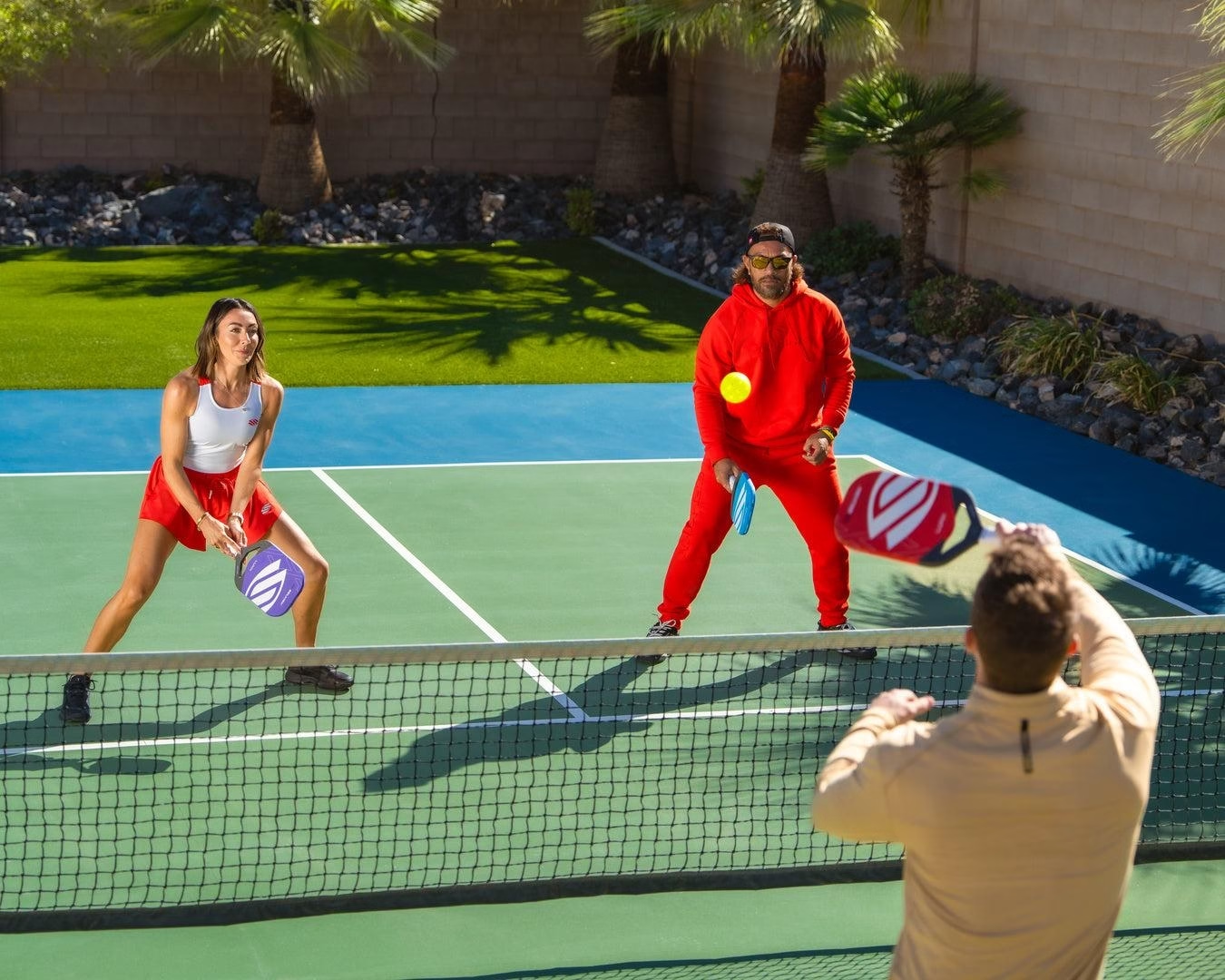
Better Ball Tracking
Players frequently need to follow:
- High lobs
- Fast volleys
- Cross-court shots
Poor lighting can make the ball difficult to see against the night sky.
Improved Safety
Uneven lighting may create:
- Dark areas
- Shadows
- Poor depth perception
These issues can increase the risk of accidents during play.
Greater Court Utilization
For clubs and facility operators, good lighting can help:
- Extend operating hours
- Increase court bookings
- Improve player satisfaction
- Support evening tournaments
| Factor | Poor Lighting | Good Lighting |
|---|---|---|
| Ball Visibility | Inconsistent | Clear |
| Player Comfort | Lower | Higher |
| Safety | Lower | Higher |
| Court Usage | Limited | Extended |
My Personal Insight
In my experience, player complaints are usually related to glare or uneven lighting rather than insufficient brightness. Good lighting design focuses on visibility and comfort, not just lux levels.
What Illuminance Level Is Recommended for Pickleball Courts?
Many buyers ask how much light a pickleball court needs.
Most pickleball projects are designed with average illuminance levels between 300 and 750 lux, depending on the level of play and facility requirements.
Typical Design Targets
| Court Type | Typical Illuminance | Typical Uniformity (Uo) |
|---|---|---|
| Recreational | 300–500 lux | ≥0.50 |
| Club & Competition | 500–750 lux | ≥0.60 |
| Tournament | 750 lux+ | Project Specific |
What Is Uniformity?
Uniformity measures how evenly light is distributed across the playing surface.
Higher uniformity helps:
- Reduce dark areas
- Improve ball visibility
- Increase player comfort
- Create more consistent playing conditions
A court can achieve the target lux level but still perform poorly if lighting is uneven.
Important Design Note
The values above are commonly used design targets in sports lighting projects.
Actual performance depends on:
- Fixture output
- Optical distribution
- Pole placement
- Mounting height
- Court layout
- Lighting simulation results
My Personal Insight
When reviewing lighting plans, I pay close attention to uniformity rather than average lux alone. Two courts can have the same average illuminance but provide very different playing experiences.
What Pole Height Works Best for Pickleball Courts?
Pole height plays an important role in visibility, glare control, and lighting uniformity.
Most pickleball courts use mounting heights between 8 and 12 meters, depending on the level of play, court layout, fixture selection, and lighting requirements.
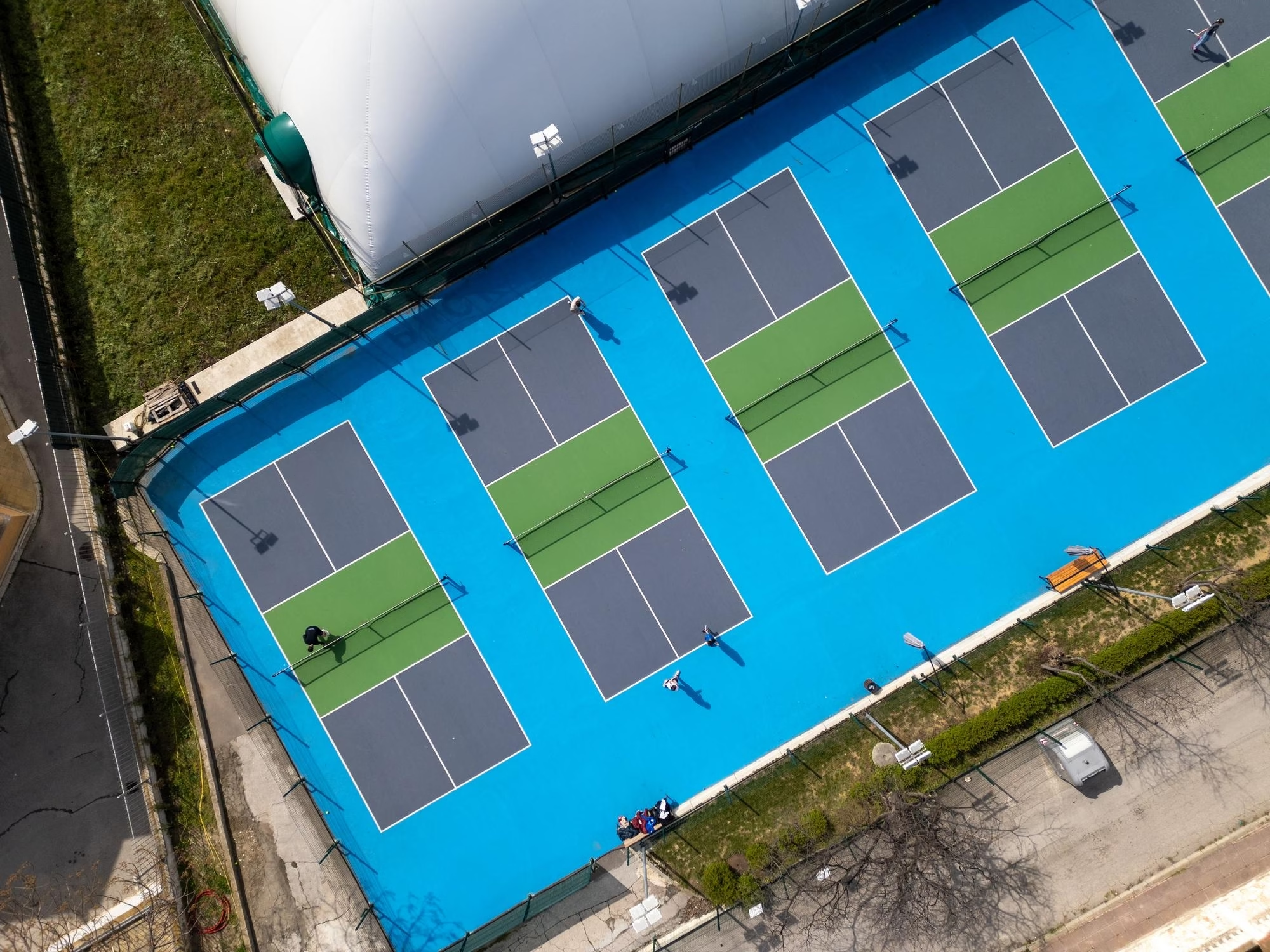
Typical Mounting Heights
| Court Type | Typical Pole Height |
|---|---|
| Recreational | Around 8 m |
| Club & Competition | 8–10 m |
| Tournament | 10–12 m |
Why Taller Poles Are Often Preferred
Higher mounting heights can help:
- Improve light distribution
- Reduce glare
- Increase uniformity
- Improve visibility during high lobs
Why Pole Height Alone Does Not Guarantee Performance
A taller pole does not automatically create better lighting.
Final performance also depends on:
- Fixture selection
- Beam angle
- Pole locations
- Court dimensions
This is why lighting simulation is important during the design stage.
My Personal Insight
Many buyers focus on fixture wattage first. However, I have seen projects where adjusting pole height and fixture positioning produced greater improvements than installing larger fixtures.
What Is the Best Lighting Layout for a Pickleball Court?
The ideal layout depends on the number of courts and the required lighting performance.
Most pickleball projects use either a 2-pole or 4-pole layout, while larger facilities often require customized layouts based on lighting calculations and simulation results.
2-Pole Layout
Typically used for:
- Single courts
- Community facilities
- Budget-conscious projects
Advantages:
- Lower installation cost
- Simpler construction
Limitations:
- Lower uniformity
- Reduced flexibility
4-Pole Layout
Typically used for:
- Sports clubs
- Competition courts
- Multi-court facilities
Advantages:
- Better uniformity
- Improved glare control
- More consistent visibility
Layout Comparison
| Feature | 2-Pole Layout | 4-Pole Layout |
|---|---|---|
| Installation Cost | Lower | Higher |
| Uniformity | Moderate | Better |
| Flexibility | Lower | Higher |
| Competition Suitability | Limited | Better |
My Personal Insight
For facilities planning future expansion, a 4-pole design often provides greater flexibility and better long-term performance.
How Do Lighting Requirements Vary by Region?
There is currently no single global pickleball lighting standard.
Most projects reference sports lighting guidance developed for tennis courts and multi-purpose sports facilities.
Although requirements vary by region, many pickleball projects follow similar lighting principles focused on visibility, uniformity, and glare control.
Europe and the United Kingdom
Many projects reference sports lighting guidance such as EN 12193.
Typical design targets often include:
| Application | Typical Illuminance |
|---|---|
| Community Play | Around 300 lux |
| Club Play | Around 500 lux |
| Competition Play | Around 750 lux |
Australia and New Zealand
Sports facilities commonly use:
- 300–500 lux for recreational courts
- 500–750 lux for competition courts
Southeast Asia and the Middle East
Many projects follow international sports lighting practices with lighting levels selected according to facility type and user expectations.
Important Note
Project requirements should always be confirmed with local regulations, facility operators, and lighting consultants.
What Are the Most Common Pickleball Court Lighting Design Mistakes?
Many lighting problems are not caused by insufficient brightness. In many projects, the real issues come from poor layout decisions made during the design stage.
A successful pickleball lighting system depends on more than lux levels. Pole height, fixture placement, optics, and lighting uniformity all influence court performance.
Focusing Only on Lux Levels
High illuminance does not automatically guarantee good lighting.
Poor uniformity can still create:
- Dark areas
- Shadows
- Uneven visibility
Using Poles That Are Too Short
Lower mounting heights can increase glare and reduce visibility during high lobs.
Ignoring Fixture Optics
Fixture wattage alone does not determine performance.
Optical distribution affects:
- Light spread
- Uniformity
- Glare control
- Light spill
Choosing Layout Based Only on Cost
The lowest-cost layout is not always the most effective long-term solution.
Skipping Lighting Simulations
Lighting simulations help verify:
- Illuminance
- Uniformity
- Pole placement
- Fixture aiming
Without simulation, actual performance is difficult to predict accurately.
My Personal Insight
The best pickleball lighting projects are not necessarily the brightest. They are the projects where lighting has been carefully designed to provide balanced visibility across the entire court.
Frequently Asked Questions About Pickleball Court Lighting
How bright should a pickleball court be?
Most recreational courts are commonly designed for 300–500 lux, while club and competition courts often target 500–750 lux.
What uniformity is recommended?
Many projects aim for a uniformity (Uo) of 0.50 or higher. Higher-performance facilities may require higher uniformity targets.
What pole height is commonly used?
Most pickleball courts use mounting heights between 8 and 12 meters, depending on project requirements.
Does higher lux always mean better lighting?
No. Lighting performance depends on illuminance, uniformity, glare control, fixture optics, and layout design.
Is there a global pickleball lighting standard?
No. Most projects reference sports lighting guidance developed for tennis courts and multi-purpose sports facilities.
Conclusion
The optimal pickleball court lighting setup is not defined by a single lux level or pole height. Successful projects combine appropriate illuminance, effective fixture placement, suitable mounting heights, and good lighting uniformity. For most facilities, design targets between 300 and 750 lux provide a useful starting point, but final performance should always be verified through professional lighting design and simulation.