Skip to content
How to Design Cricket Stadium Lighting That Meets ICC Standards?
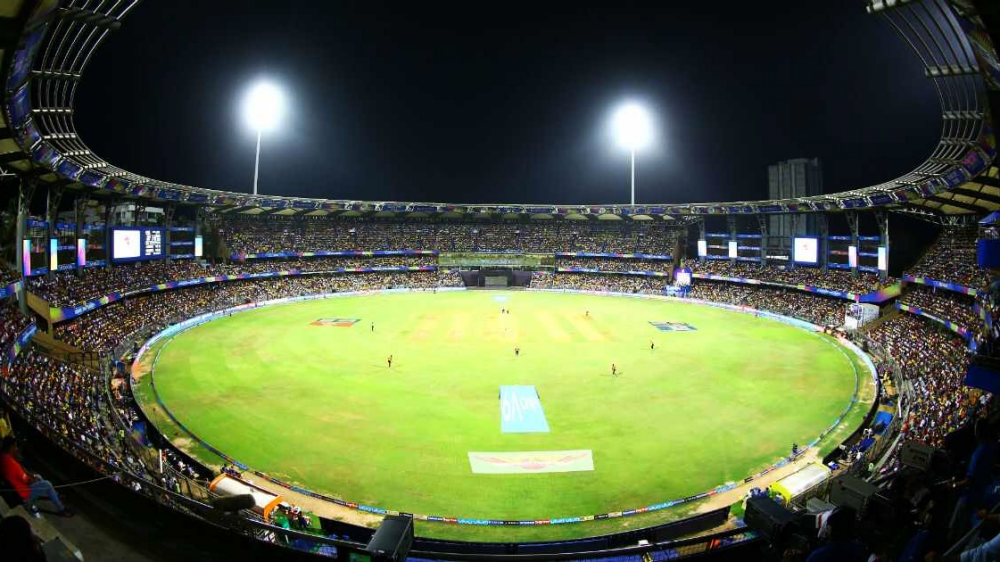
Many cricket stadium projects fail because lighting is planned too late. Owners buy floodlights first, then discover glare, dark zones, weak TV images, or failed approval.
To design cricket stadium lighting that meets ICC standards, I start with the match level, then set lux targets, uniformity, glare control, pole height, LED floodlight optics, flicker control, and lighting simulation. For reliable design data, I also compare ICC needs with AS 2560.2:2021 and Cricket Australia lighting guidance.
Why Is Cricket Stadium Lighting More Difficult Than Normal Floodlighting?
Cricket uses a fast ball, a large field, and long viewing distances. Poor lighting can quickly affect safety and match quality.
Cricket stadium lighting is difficult because players must track the ball from the pitch to the outfield, while umpires, fans, and cameras need clear visibility from many angles.
Cricket lighting is not the same as lighting a road, warehouse, or parking lot. The ball can move very fast. It can also rise high into the air. A fielder may need to look upward while running. A batter must see the ball clearly from the bowler’s hand to the hitting zone.
Cricket Australia also explains that modern cricket has changed. More short-format games, more evening play, and more training under lights have increased the need for safe and suitable lighting. The guidance also says lighting design and lighting level must create a safe environment for players, coaches, officials, and spectators.
What Good Cricket Lighting Must Improve
| Factor | Why It Matters |
|---|---|
| Ball visibility | Players must track fast and high balls |
| Pitch clarity | Batting and bowling need clear contrast |
| Outfield visibility | Fielders need safe movement |
| Spectator comfort | Fans need stable viewing conditions |
| Broadcast quality | Cameras need clear and even light |
| Safety | Poor lighting can increase match risk |
Common Problems I See
| Problem | Result |
|---|---|
| Only comparing wattage | Wrong fixture selection |
| Low pole height | Higher glare risk |
| Poor beam angle | Dark zones and spill light |
| Weak uniformity | Uneven playing conditions |
| Cheap drivers | Flicker in slow-motion video |
| No simulation | Failed tender or rework |
My View
I always explain this to buyers: cricket lighting is a system. The floodlight, pole height, beam angle, aiming plan, control system, and maintenance plan must work together.
What Standards Should I Use for Cricket Stadium Lighting?
Many buyers ask for “ICC standard lighting,” but they still need clear design numbers for real projects.
ICC requirements focus on match quality, player visibility, broadcast needs, and venue approval. For engineering design, I use AS 2560.2:2021, Cricket Australia guidance, EN 12193, CIE guidance, and local authority rules as supporting references.
AS 2560.2:2021 is a real Australian sports lighting standard. Standards Australia says AS 2560.2:2021 covers sports lighting for specific applications and gives guidance for different levels of play, from professional match play to recreational training. It also confirms that the 2021 update expanded to include cricket.
Cricket Australia’s guidance note explains that AS 2560.2 forms part of the AS 2560 series and should be read with AS 2560.1. It also says AS 2560.2 is a non-mandatory, best-practice, industry-adopted standard, and it does not include special television broadcasting lighting requirements.
Main Standards I Check
| Standard / Guide | How I Use It |
|---|---|
| ICC venue requirements | Match approval and broadcast needs |
| AS 2560.2:2021 | Cricket lighting classes and lux targets |
| AS 2560.1 | General sports lighting principles |
| EN 12193 | European sports lighting reference |
| CIE guidance | Glare and measurement principles |
| Local codes | Spill light and planning approval |
What Lux Levels Are Required for Different Cricket Venue Levels?
Many lighting mistakes happen because buyers use one lux number for every field.
Cricket lighting lux levels depend on the level of competition. Based on Cricket Australia’s AS 2560.2 guidance, outdoor cricket ranges from 100 lux for school and junior programs to 1500 lux for Class I male international and domestic competition.
Outdoor Cricket Lighting Levels
| AS 2560.2 Class | Typical Level of Competition | Square | Infield | Outfield | Practice |
|---|---|---|---|---|---|
| Class I | International / Domestic Elite | 1500 lux | 1500 lux | 1000 lux | 750 lux |
| Class II | National / State | 1000 lux | 850 lux | 700 lux | 500 lux |
| Class III | Premier / U19 | 750 lux | 600 lux | 500 lux | 400 lux |
| Class IV | Senior / Female Premier | 500 lux | 400 lux | 300 lux | 300 lux |
| Class V | Community / Junior | 300 lux | 250 lux | 200 lux | 150 lux |
| Class VI | Local Community | 200 lux | 200 lux | 200 lux | 100 lux |
| Class VII | School / Junior Programs | 100 lux | 100 lux | 100 lux | 75 lux |
Why Maintained Lux Matters
I always use maintained illuminance, not only initial illuminance. LED output drops over time because of heat, dust, and aging.
My View
If a client needs international-level cricket lighting, I use Class I as a serious benchmark. If the project is a school ground, using Class I numbers wastes budget.
What Uniformity and Glare Values Should I Check?
High lux does not mean good lighting. A bright but uneven field is still poor lighting.
Uniformity measures how evenly light is spread across the field. For high-level cricket, the pitch, infield, and outfield need strong uniformity and controlled glare so players can track the ball comfortably.
Class I Cricket Lighting Benchmark
| Section / Area | E.Avg | Emin / Emed | Emin / Emax | GRmax |
|---|---|---|---|---|
| Square / Pitch | 1500 lux | 0.8 | 0.7 | 40 |
| Infield | 1500 lux | 0.7 | 0.6 | 45 |
| Outfield | 1000 lux | 0.6 | 0.5 | 50 |
What These Terms Mean
| Term | Meaning |
|---|---|
| E.Avg | Average illuminance |
| Emin | Minimum illuminance |
| Emed | Median illuminance |
| Emax | Maximum illuminance |
| GRmax | Maximum glare rating |
My View
For serious projects, I always verify uniformity and glare through Dialux or Relux simulation.
How Do I Choose the Right Pole Height by Venue Level?
Many buyers ask if ICC requires 80m poles. It does not.
ICC and AS 2560.2 focus on lighting performance, not fixed pole height. The right mast height depends on venue size, lux target, seating design, and glare control.
Common Pole Height by Venue Level
| Venue Level | Common Pole Height |
|---|---|
| School Ground | 12–20m |
| Community Ground | 20–30m |
| Professional Stadium | 35–50m |
| International Stadium | 50–70m |
| Mega Stadium | 70–80m+ |
What LED Floodlights Are Best for Cricket Stadium Lighting?
Many LED floodlights look similar, but project results can be very different.
The best LED floodlights for cricket stadium lighting should provide high lumen output, precise optics, low glare, surge protection, flicker-free drivers, and stable lumen maintenance.
LED Specification I Recommend
| Feature | Recommended Level |
|---|---|
| CRI | 80+ / 90+ |
| Flicker | Low flicker |
| IP Rating | IP66 |
| Surge Protection | 10KV–20KV |
| Beam Angles | 10°–60° |
| Control | DALI / 0-10V |
| Housing | Die-cast aluminum |
My View
Cheap floodlights often become expensive later through failure or poor lighting results.
Why Is Lighting Simulation Necessary?
A stadium lighting project should never depend on guesswork.
Lighting simulation helps confirm lux levels, uniformity, glare control, beam aiming, fixture quantity, and pole layout before installation.
What I Check in Every Simulation
| Check Item | Why It Matters |
|---|---|
| Average lux | Confirms brightness |
| Minimum lux | Avoids dark zones |
| Uniformity | Ensures balance |
| Glare | Improves comfort |
| Spill light | Protects nearby area |
| Pole aiming | Improves efficiency |
My View
If a supplier cannot provide simulation files, I do not treat the quotation as complete.
How Do I Balance Budget and Performance?
Many buyers focus only on first cost. That is risky.
The best way to balance budget and performance is to choose the correct lighting class, simulate the design, compare lifecycle cost, and avoid overdesign or underdesign.
What Buyers Should Compare
| Item | Why It Matters |
|---|---|
| Lighting class | Sets correct lux target |
| Fixture quantity | Controls cost |
| Power use | Affects long-term bills |
| Pole height | Affects installation cost |
| Warranty | Reduces risk |
| Certification | Helps tender approval |
My View
I always advise buyers to compare 5-year cost, not only invoice price.
How Does iShineLux Support Cricket Stadium Projects?
Many suppliers sell lights. Fewer suppliers help clients win projects.
iShineLux supports cricket stadium lighting projects with LED sports floodlights, free Dialux design, OEM / ODM service, project guidance, and one-to-one technical support.
What We Offer
| Service | Value |
|---|---|
| Free Dialux design | Faster planning |
| Beam angle advice | Better lux and uniformity |
| OEM / ODM support | Build private label business |
| Certification support | Easier tender approval |
| Modular design | Easy maintenance |
| Fast response | Better communication |
My View
The right supplier should help you reduce risk, pass technical review, and win more projects.
Conclusion
To design cricket stadium lighting that meets ICC standards, I first define the venue level, then match lux, uniformity, glare, pole height, optics, and simulation. Verified AS 2560.2 data makes the project more reliable, more efficient, and more convincing.