Skip to content
What Are the Tennis Court Lighting Standards and Requirements?
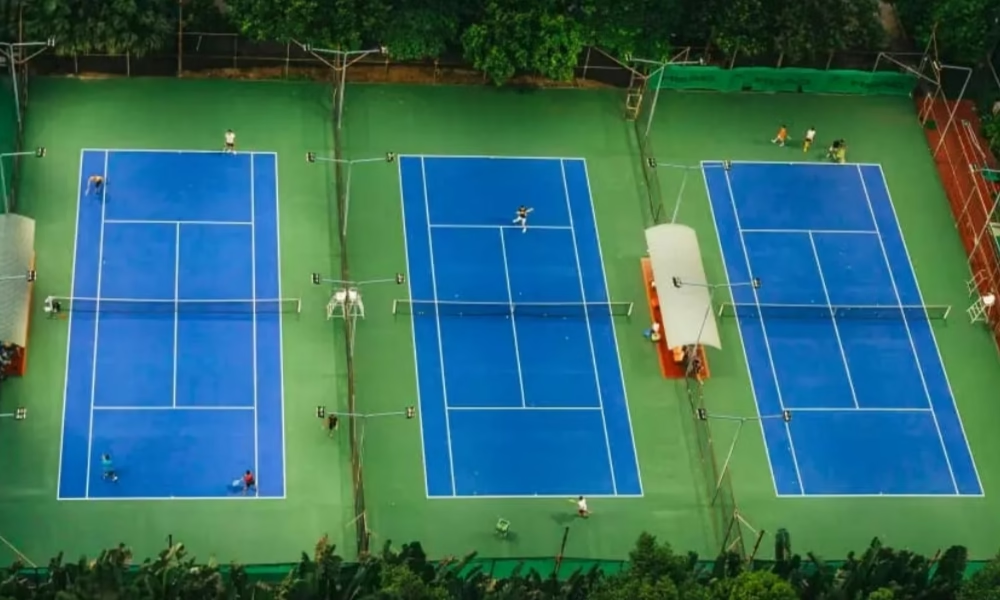
Tennis court lighting plays an important role in player visibility, match quality, and facility performance. Whether you are designing a recreational court, a club facility, or a professional venue, understanding tennis court lighting standards is essential for achieving the right results.
Tennis court lighting standards define the illuminance levels, uniformity ratios, glare control requirements, and lighting quality needed for safe and effective play. These requirements vary depending on the level of competition and the intended use of the court.
A well-designed lighting system improves visibility, supports compliance, reduces maintenance costs, and creates a better experience for both players and spectators.
Why Are Tennis Court Lighting Standards Important?
Tennis is one of the fastest ball sports, and visibility directly affects player performance. Even small lighting inconsistencies can impact ball tracking, reaction time, and overall playing experience.
Tennis court lighting standards provide measurable performance requirements that help ensure consistent visibility, player safety, and fair playing conditions. They also help facility owners select lighting systems that deliver long-term value and compliance.
How Lighting Affects Player Performance
Players constantly track a fast-moving ball while changing direction. Poor visibility can make it difficult to judge speed, spin, and trajectory.
Proper lighting helps:
- Improve ball visibility
- Reduce eye fatigue
- Support faster reaction times
- Improve match consistency
- Enhance spectator viewing
Why Standards Matter for Facility Owners
Lighting standards help facility owners:
- Meet competition requirements
- Improve court utilization
- Reduce liability risks
- Enhance user satisfaction
- Support future upgrades
Key Lighting Factors
| Factor | Purpose |
|---|---|
| Illuminance | Overall brightness |
| Uniformity | Consistent lighting distribution |
| Glare Control | Player comfort |
| CRI | Color accuracy |
| Color Temperature | Visual clarity |
Personal Insight
In my experience, the most successful tennis court projects begin with performance targets rather than fixture wattage. When the required lighting standards are clearly defined, it becomes much easier to create a cost-effective design.
What Size Is a Standard Tennis Court and How Does It Affect Lighting Design?
Court dimensions influence pole placement, fixture quantity, beam angle selection, and lighting uniformity. A lighting design that ignores court dimensions often produces uneven results.
A standard doubles tennis court measures 23.77m × 10.97m, but lighting systems must illuminate the entire playing area, including run-off zones. Court dimensions directly influence lighting layout and fixture positioning.
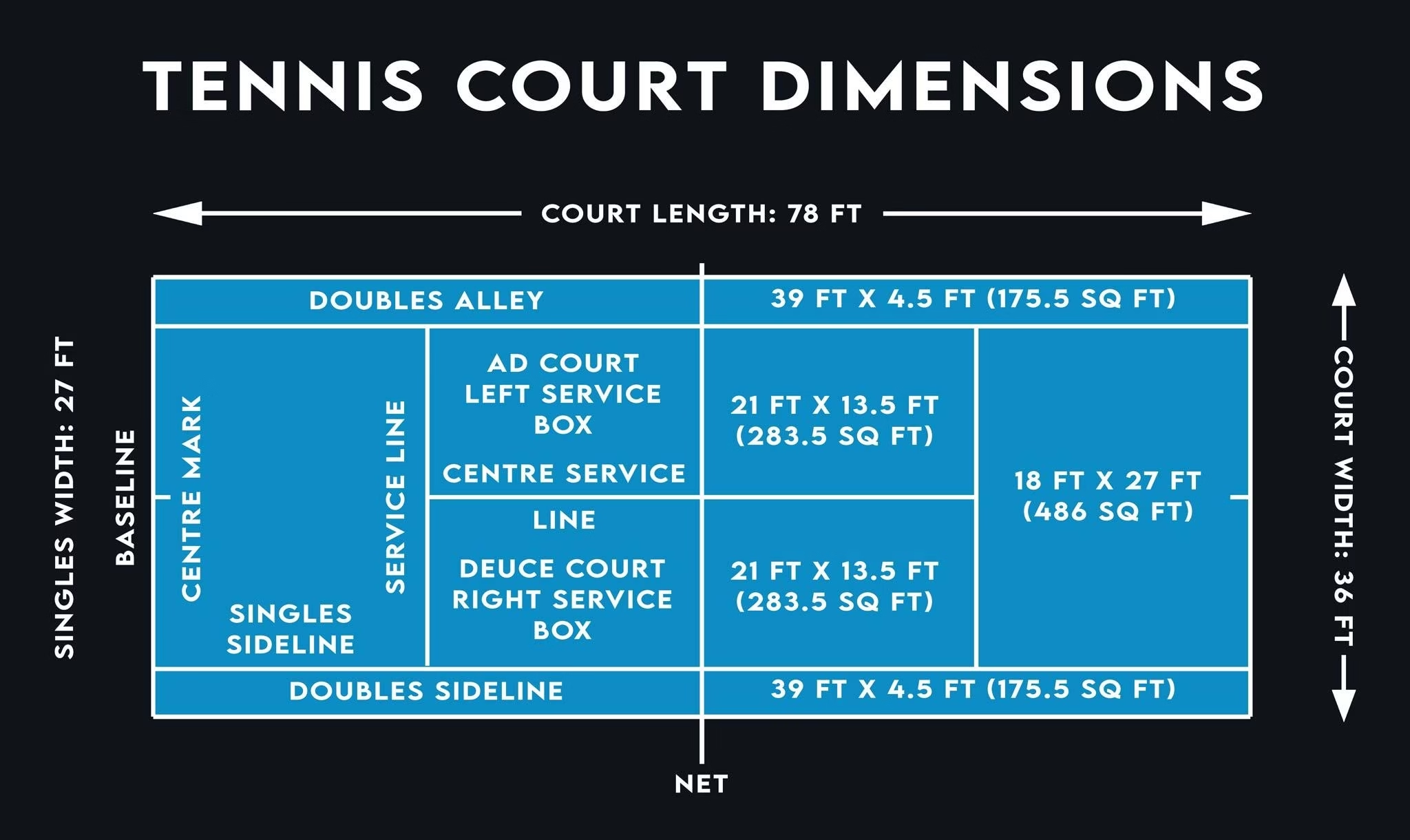
Standard Tennis Court Dimensions
| Court Element | Metric | Imperial |
|---|---|---|
| Court Length | 23.77 m | 78 ft |
| Singles Width | 8.23 m | 27 ft |
| Doubles Width | 10.97 m | 36 ft |
| Recommended Playing Area | 36 m × 18 m | 118 ft × 59 ft |
The dimensions above represent a standard doubles tennis court and its recommended playing area. Lighting designs should cover the entire playing area, including the run-off zones outside the marked court lines, to ensure consistent visibility and compliance with tennis court lighting standards.
Why Court Dimensions Affect Lighting Layout
The larger the illuminated area, the more challenging it becomes to achieve:
- High uniformity
- Low glare
- Consistent brightness
- Efficient energy usage
Lighting designs should always consider the entire playing area rather than only the marked court.
Court Size and Fixture Placement
Court dimensions influence:
- Pole locations
- Fixture aiming angles
- Beam angle selection
- Illuminance distribution
- Uniformity performance
A properly planned layout helps reduce dark areas and improve overall visibility.
Personal Insight
I often see projects where fixture selection starts before the court layout has been finalized. A better approach is to begin with court dimensions and then develop the lighting design around them.
What Illuminance Levels Are Required for Different Tennis Courts?
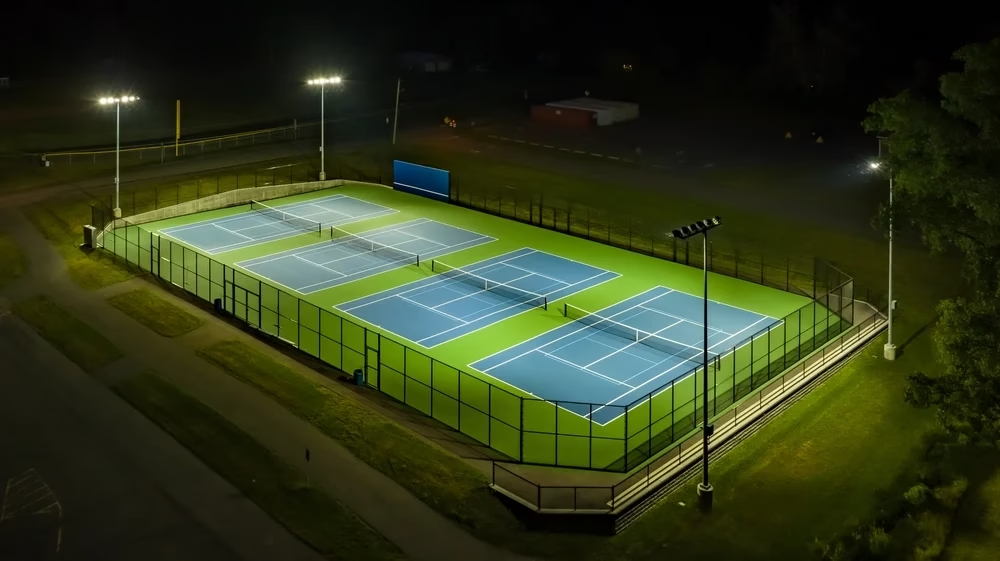
Not every tennis court requires the same lighting level. Competition requirements have a major influence on illuminance targets.
The required illuminance level depends on the type of facility and level of play. Recreational courts generally require lower lux levels, while professional tournaments require significantly higher illumination and stricter performance requirements.
Tennis Court Lighting Classifications
| Court Classification | Application | Average Lux |
|---|---|---|
| Class III | Recreational | 200–300 |
| Class II | Clubs & Schools | 300–500 |
| Class I | Competition | 500–1000 |
| International | Professional Events | 1000–2000 |
| HDTV Broadcast | Television Events | 1500–2500 |
Why Higher Lux Levels Are Needed
Higher competition levels require:
- Faster ball tracking
- Better visibility
- Improved spectator viewing
- Broadcast-quality image capture
Vertical vs Horizontal Illuminance
Many buyers focus only on horizontal lux levels. However, tennis players frequently look upward while tracking the ball.
A successful design should balance:
- Horizontal illuminance
- Vertical illuminance
- Uniformity
- Glare control
Personal Insight
When discussing projects with customers, I always recommend defining the competition level first. Once the lighting class is known, the required lux levels become much easier to determine.
What Uniformity Ratio Is Recommended for Tennis Courts?
Brightness alone does not determine lighting quality. Even a bright court can perform poorly if the lighting is uneven.
Uniformity measures how evenly light is distributed across the court. Good uniformity improves visibility, reduces eye strain, and creates more consistent playing conditions.
Recommended Uniformity Levels
| Competition Level | Uniformity Ratio |
|---|---|
| Recreational | 0.50 |
| Club | 0.60 |
| Competition | 0.70 |
Why Uniformity Matters
Benefits include:
- Better ball visibility
- Improved visual comfort
- Reduced player fatigue
- More professional court appearance
Common Uniformity Problems
Poor layouts can create:
- Bright hotspots
- Dark corners
- Uneven brightness
- Increased glare
Personal Insight
I have seen courts with high lux levels receive complaints because the lighting was uneven. Uniformity often has a greater impact on player experience than average illuminance.
What Color Temperature and CRI Are Best for Tennis Courts?
Color quality affects how clearly players see the ball, court lines, and surrounding environment.
Most tennis court lighting systems use a color temperature between 5000K and 5700K with a CRI above 70. Higher CRI values are often preferred for professional competitions and broadcast applications.
Recommended Lighting Specifications
| Parameter | Recommendation |
|---|---|
| CCT | 5000K–5700K |
| CRI | >70 |
| Broadcast CRI | >80 |
Benefits of Higher CRI
Higher CRI improves:
- Ball visibility
- Court contrast
- Spectator experience
- Broadcast image quality
Balancing Performance and Efficiency
The goal is to achieve excellent visibility while maintaining energy efficiency and minimizing operating costs.
Personal Insight
For most outdoor tennis court projects, I find that 5000K LED lighting provides an excellent balance between visibility, efficiency, and player comfort.
What Is the Best Tennis Court Lighting Layout?
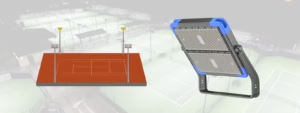
A tennis court lighting system is only as effective as its layout. Even high-performance fixtures can produce poor results if pole placement and fixture positioning are not properly designed.
The best tennis court lighting layout provides uniform illumination across the entire playing area while minimizing glare and light spill. An effective layout should support the required lux level, improve player visibility, and comply with applicable lighting standards.
Why Lighting Layout Matters
Lighting layout directly affects:
- Illuminance levels
- Uniformity ratios
- Player comfort
- Glare control
- Energy efficiency
A poorly designed layout can create bright hotspots and dark areas, even when average lux levels appear acceptable.
Common Tennis Court Lighting Layouts
| Layout Type | Typical Application |
|---|---|
| Four-Pole Layout | Recreational and residential courts |
| Six-Pole Layout | Club and training facilities |
| Eight-Pole Layout | Competition and tournament venues |
| Custom Layout | Professional sports facilities |
Pole Placement Considerations
Key factors include:
- Court dimensions
- Pole height
- Fixture aiming angles
- Surrounding structures
- Spill light requirements
For most projects, poles are positioned outside the playing area to reduce visual distractions and improve safety.
How Pole Height Affects Lighting Performance
| Pole Height | Typical Application |
|---|---|
| 6–8 m | Residential courts |
| 8–10 m | Club courts |
| 10–12 m | Competition courts |
Higher mounting heights generally improve light distribution and reduce glare.
Personal Insight
In my experience, lighting layout has a greater impact on court performance than fixture quantity alone. A well-designed layout often improves visibility, reduces glare, and lowers overall project costs at the same time.
How Can Buyers Choose the Right Tennis Court Lighting System?
Selecting a lighting system requires balancing performance, efficiency, installation requirements, and long-term operating costs.
The best tennis court lighting systems combine proper illuminance, excellent uniformity, effective glare control, and reliable long-term performance.
How Tennis Court Lighting Standards Influence Fixture Selection
Buyers should evaluate:
- Optical design
- Beam angle
- Mounting height
- Glare control
- Environmental protection
Beam Angle Selection
| Beam Angle | Typical Application |
|---|---|
| Narrow | High poles |
| Medium | Standard courts |
| Wide | Lower mounting heights |
| Asymmetric | Spill light control |
Pole Height and Fixture Placement
Proper pole placement helps improve:
- Uniformity
- Visibility
- Energy efficiency
- Glare control
Why LED Sports Lights Are Preferred
| Feature | LED | Metal Halide |
|---|---|---|
| Energy Consumption | Lower | Higher |
| Maintenance | Lower | Higher |
| Startup Time | Instant | Slow |
| Lifespan | Longer | Shorter |
Evaluating Total Cost of Ownership
A lighting system should be evaluated based on:
- Energy costs
- Maintenance costs
- Replacement frequency
- Long-term reliability
Personal Insight
In my experience, the most cost-effective projects are not always those with the lowest initial fixture price. The best results come from selecting a lighting system that balances performance, reliability, and operating costs.
Conclusion
Tennis court lighting standards provide the framework for safe play, consistent visibility, and long-term facility performance. By understanding illuminance levels, uniformity requirements, color quality, lighting layouts, and fixture selection principles, buyers can design a tennis court lighting system that delivers reliable performance and long-term value.